
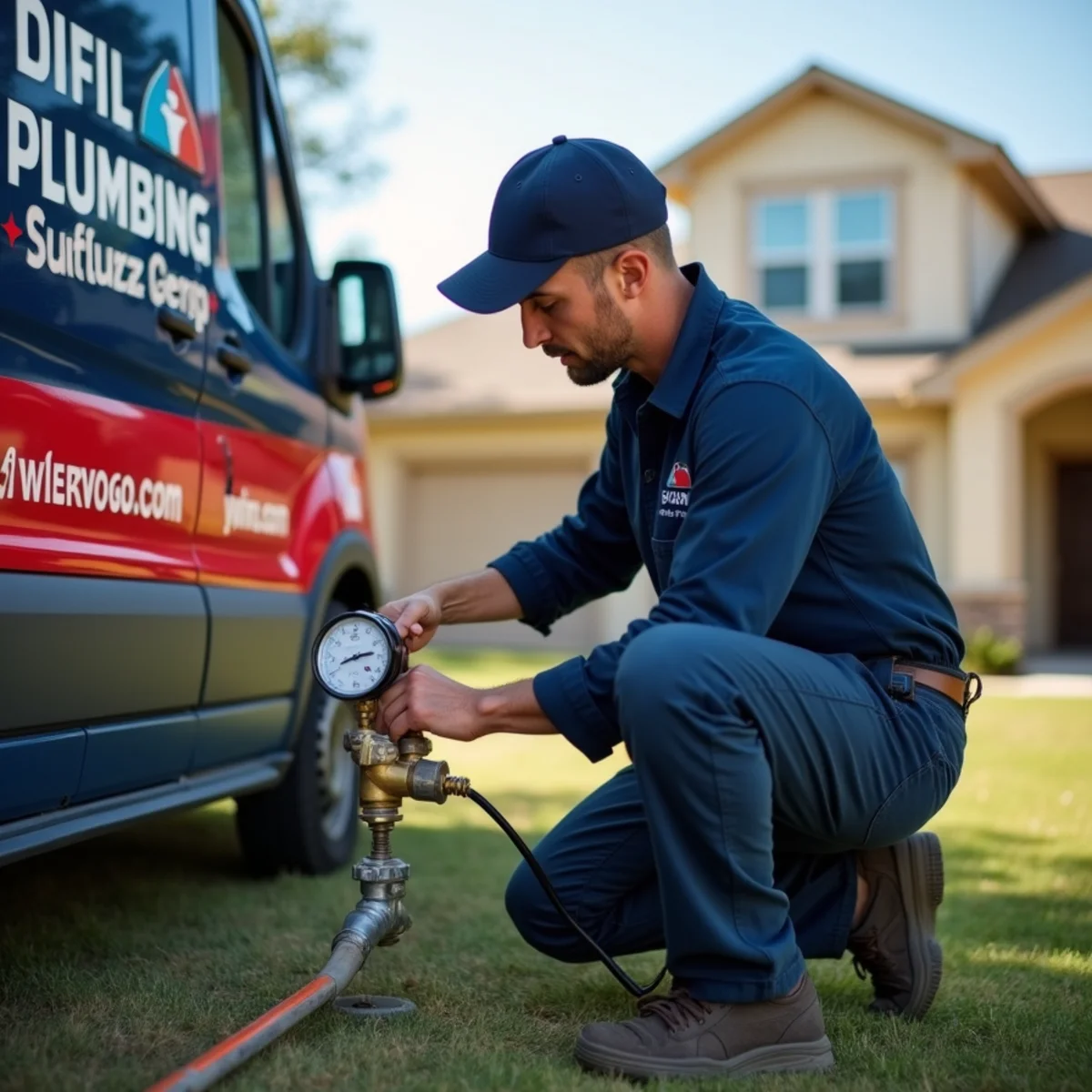
Most people worry about water pressure that's too low. But pressure that's too high is the quiet, more expensive problem — it stresses every pipe, joint, and appliance in your home around the clock, and you may not notice until something fails. Here's how to tell if your Cibolo home has too much pressure, and what to do about it.
What 'too high' actually means
Residential water pressure should generally sit between about 40 and 80 psi. Above 80 psi is considered too high and, in Texas, exceeds what plumbing code allows without a regulator. Some Cibolo-area homes — especially those on certain municipal lines or at lower elevations — can see pressure well above that, and it's hard on everything.
The warning signs
- Banging or hammering pipes when you shut off a faucet (water hammer)
- Faucets that drip or valves that wear out and leak early
- A water heater's T&P relief valve that periodically releases water
- Running toilets and short-lived fill valves
- Spitting or sputtering faucets, and unusually forceful flow
- Appliance hoses (washer, dishwasher) that fail or burst
How to check your pressure
You can buy an inexpensive pressure gauge that screws onto an outdoor hose bib or the washer connection. Attach it, open the tap fully, and read the psi. Check it at a few times of day — pressure can spike overnight when municipal demand drops. If you're seeing readings above 80 psi, you have a problem worth fixing.
The fix: a pressure-reducing valve (PRV)
The solution is a pressure-reducing valve installed on your main line where it enters the house. A PRV automatically knocks incoming pressure down to a safe, steady set point (commonly around 60 psi). If your home doesn't have one — or has an old one that's failed — installing or replacing it protects every pipe, fixture, and appliance downstream. It's a modest job with an outsized payoff, and it's part of the fixture and valve work we do routinely.
Why it's worth fixing in Cibolo
Between high pressure and our hard water, Cibolo plumbing takes a double hit. Homeowners in Cibolo and Universal City who address both — a PRV for pressure and a softener for hardness — see dramatically fewer leaks, drips, and early appliance failures. It's the cheapest insurance in plumbing.
Get your pressure checked
If you're seeing water hammer, early fixture failures, or a relief valve that keeps dripping, have your pressure tested. We check it, confirm whether a PRV is needed, and install or replace one. Call (831) 290-4327 to book in Cibolo or the Metrocom.
Why We Always Check Pressure on a 'Mystery Leak' Call
When a homeowner calls about fixtures that keep failing, toilets that keep running, or a relief valve that keeps dripping, the first thing we do is put a gauge on the system — because high pressure is the hidden cause behind a surprising share of those complaints. People spend money replacing one fill valve after another without realizing 95 psi is destroying each new one. Checking pressure takes five minutes and often explains a year of 'random' problems at once.
We also check pressure at more than one time of day when we suspect a problem, because municipal pressure often climbs overnight when neighborhood demand drops. A system that reads 75 psi at noon can spike well past 85 at 3 a.m., hammering your pipes while you sleep. That overnight spike is exactly why a properly set pressure-reducing valve — not just a one-time adjustment — is the real fix.
There's one related issue a PRV can introduce that we always address at the same time: thermal expansion. Once a pressure-reducing valve is installed, your home becomes a 'closed' system, so when the water heater heats up and the water expands, that pressure has nowhere to go — and it can push your heater's relief valve open or stress the tank. The fix is a small expansion tank installed near the water heater. A good installer adds one as part of the PRV job; it's a cheap part that prevents a new problem from replacing the old one.
If you've just moved into an older Cibolo home, checking the pressure is one of the smartest first things you can do. Many homes either never had a PRV or have one that quietly failed years ago, and the new owner inherits the slow damage without knowing it. A five-minute gauge test tells you whether the previous owners' 'random' leaky faucets and running toilets were really a pressure problem all along — and whether you're about to repeat the same repairs until it's addressed at the source.
Frequently Asked Questions
Residential water pressure should generally fall between about 40 and 80 psi. Below 40 feels weak; above 80 psi is too high and, under Texas plumbing code, requires a pressure-reducing valve. A cheap gauge on an outdoor spigot tells you where you stand — check at a few times of day, since pressure often spikes overnight.
A PRV installation is a modest job compared to the damage high pressure causes over time. The exact cost depends on your plumbing and whether it's a new install or a replacement of a failed valve. We check your actual pressure first to confirm a PRV is the right fix, then give you a written price before we start.
A quality PRV typically lasts around 10–15 years, though hard water can shorten that as mineral buildup affects the internal spring and seat. If your home has an older PRV and you're seeing pressure problems return, the valve itself may have failed and need replacement. We test the actual pressure to confirm whether the PRV is the issue before replacing it.
Cibolo Pro Plumbing
Licensed Texas plumbers (TX Master Plumber (TSBPE)) based in Cibolo, serving the Metrocom for 15+ years. Have a question about your home's plumbing? Call (831) 290-4327.