When a sewer line fails, you'll hear two very different repair approaches: trenchless (fixing the line with little or no digging) and traditional open-trench (digging the line up and replacing it). Both have their place, and the right one depends on your line's condition, what's on top of it, and your budget. Here's a straight comparison.
The quick comparison
- Yard & hardscape damage: trenchless wins — only small access pits vs. a full trench
- Speed: trenchless is usually faster, often a day vs. several
- Cost per foot: traditional is lower; trenchless costs more per foot
- Works on a fully collapsed line: traditional wins — trenchless needs a viable host pipe
- Longevity: both are excellent when done right; a new liner or pipe lasts decades
How each method works
Trenchless repair
There are two main trenchless approaches. Pipe lining (CIPP) pulls a resin-saturated liner into the existing pipe and cures it in place, creating a new pipe inside the old one. Pipe bursting pulls a new pipe through the old one while fracturing the old pipe outward. Both need only small access points, so your driveway, patio, and mature trees usually stay intact. See our sewer line repair page for how we determine which fits.
Traditional open-trench repair
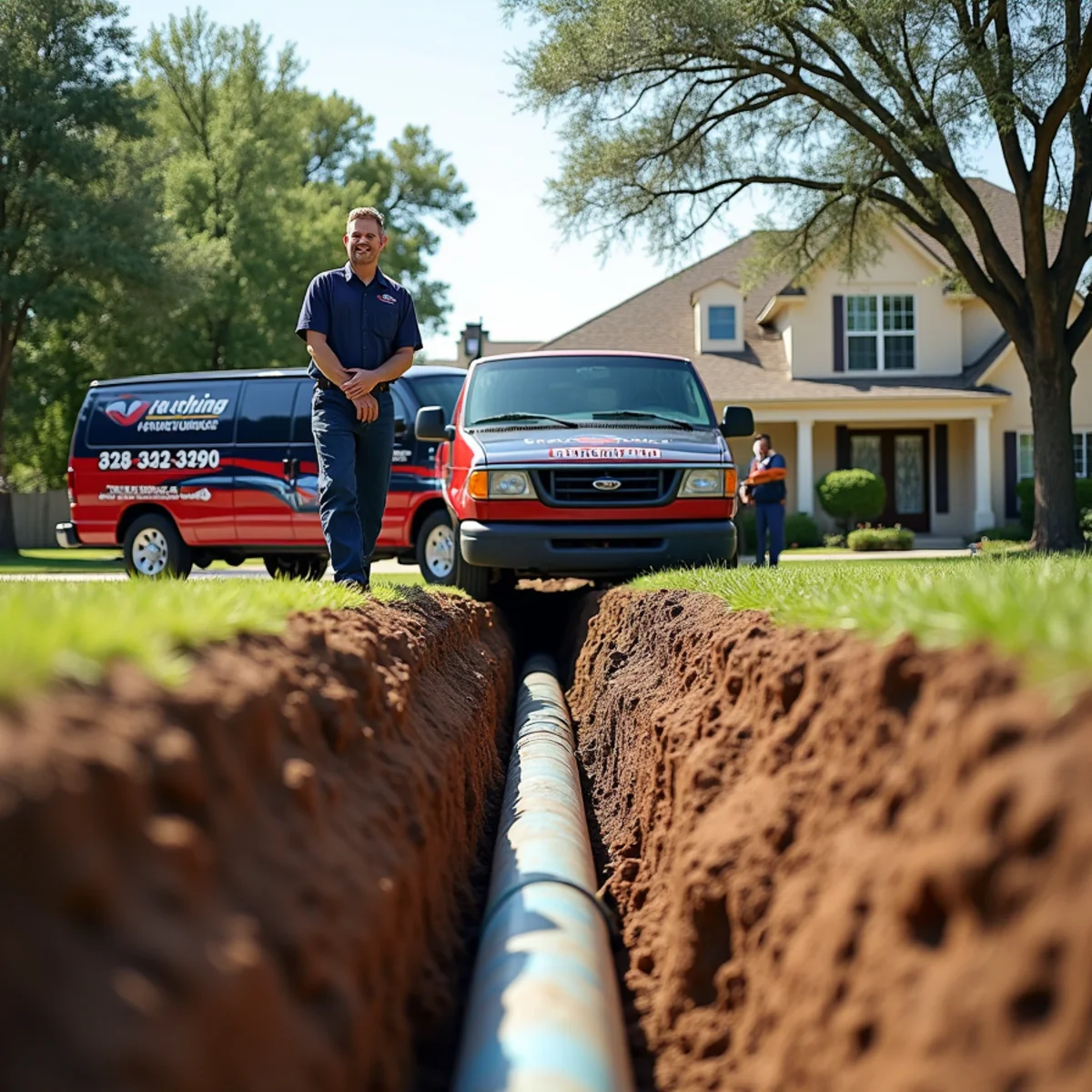
The classic method: excavate down to the line, remove the damaged section, lay new pipe, and backfill. It's the right call when the line has fully collapsed (no host pipe for trenchless to work with), when the grade or bellies need to be corrected, or when the run is short and shallow enough that digging is simply cheaper.
When trenchless wins
- The line runs under a driveway, patio, deck, or mature landscaping you don't want destroyed
- The existing pipe is damaged but still structurally viable as a host
- You want the job done fast with minimal disruption
When traditional wins
- The line has collapsed or is badly offset — there's no host pipe for a liner
- The grade is wrong and bellies need to be re-set, not just relined
- It's a short, shallow run where excavation is genuinely cheaper
The real cost picture
Trenchless costs more per foot, but that's only half the math. Once you add the cost of tearing out and rebuilding a driveway, walkway, or landscaping, trenchless often comes out even or ahead. On a plain grass run, traditional can be cheaper. For homes across Cibolo and Seguin, we price both honestly so you can compare total cost, not just the per-foot number. Our sewer line replacement cost guide breaks the numbers down further.
How we help you decide
We camera the line, show you the footage, and lay out both methods with real numbers for your specific situation — then you choose. Call (831) 290-4327 to schedule a sewer camera inspection in Cibolo.
What the Camera Tells Us That a Quote Can't
Any contractor who recommends trenchless or digging before running a camera is guessing. The camera answers the questions that actually decide the method: Is the existing pipe intact enough to host a liner, or has it collapsed? Where exactly is the damage, and how deep? Are there bellies — low spots where waste pools — that a liner would simply preserve? We won't recommend a method until we've seen the inside of your line, because the wrong method on the wrong pipe is wasted money.
There's also an honesty test built into trenchless work: it isn't always the right answer, even though it's the premium option. If your line has a belly that needs re-grading, lining it just locks in the problem. We'll tell you when traditional excavation is genuinely the better repair for your situation, rather than selling the higher-ticket method by default.
It's also worth thinking past the repair itself to the cleanout. Many older Cibolo homes lack a convenient, properly placed sewer cleanout, which makes every future camera inspection and drain clearing harder than it needs to be. When we're already working on your line, adding or relocating a cleanout is inexpensive and pays for itself the first time you need routine service — something neither method's headline price usually mentions, but we'll raise it so you can decide.
Whichever method you choose, get the warranty in writing and ask for the post-repair camera footage. A reputable sewer repair — trenchless or traditional — should come with a workmanship warranty and a final camera pass proving the line is clean and correctly graded. If a quote is notably cheaper but comes with no warranty and no proof, that gap is usually where the savings came from. Compare the whole package, not just the number at the bottom.
Frequently Asked Questions
Yes — a properly installed pipe liner (CIPP) or a burst-in new pipe is designed to last decades, comparable to a traditional replacement. The key is that the method is matched to the line's condition, which is why we camera first. Done on the right pipe, trenchless is every bit as permanent as digging.
No. Trenchless lining needs a structurally viable host pipe, and pipe bursting needs a clear path. A fully collapsed line, a severe offset, or a line with bellies that must be re-graded usually calls for traditional excavation. The camera inspection tells us definitively which methods are options for your line.
It depends on the cause and your policy. Sudden, accidental damage is more often considered than gradual wear or root intrusion, and the method (trenchless vs. dig) usually matters less to the insurer than the cause of failure. We document the camera findings and the cause in writing, which is what your adjuster needs to evaluate the claim.
Cibolo Pro Plumbing
Licensed Texas plumbers (TX Master Plumber (TSBPE)) based in Cibolo, serving the Metrocom for 15+ years. Have a question about your home's plumbing? Call (831) 290-4327.