
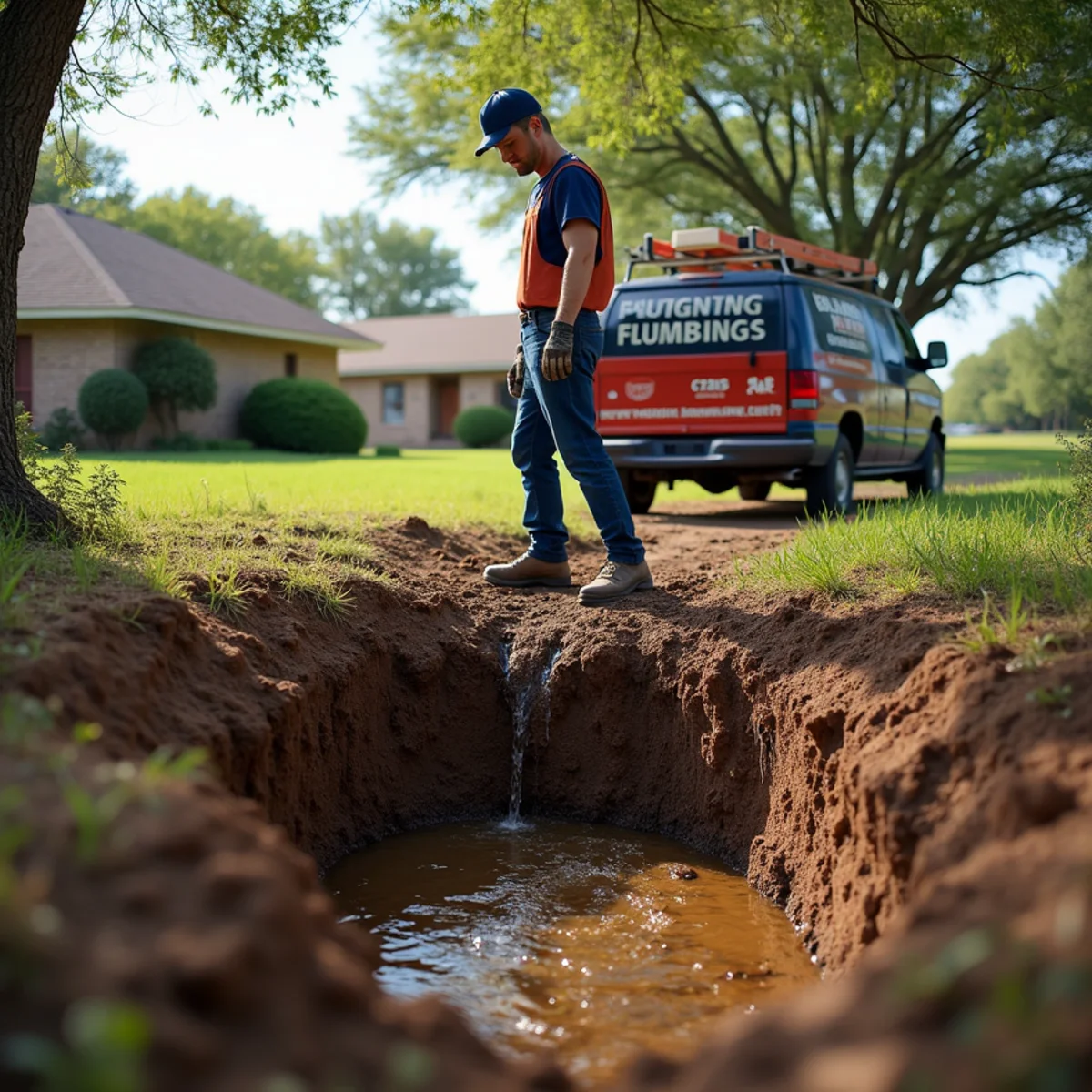
The big, mature live oaks that shade neighborhoods in Live Oak and Windcrest are one of the area's best features — and one of the most common reasons sewer lines fail here. If your whole house drains slowly and clogs keep coming back, roots are a prime suspect.
Why roots love sewer lines
Tree roots are always seeking water and nutrients, and a sewer line is full of both. They find the tiny gaps at pipe joints — especially in the older clay laterals common in 1970s subdivisions — and push inside. Once in, they grow into a mat that snags everything and eventually blocks the line.
Signs it's roots, not just a clog
- Multiple drains run slow across the whole house, not just one fixture
- Clogs return weeks after you clear them
- Gurgling toilets or drains when another fixture runs
- Recurring backups, sometimes worse after rain
- A sewage smell near the yard or cleanout
How we confirm it
We run a camera down the line during a sewer line inspection. Roots are unmistakable on camera — you'll see the mat and exactly which joint they entered through. That tells us where the pipe is compromised, not just where the clog sits.
Clearing vs. fixing
Cutting the roots with a cable or hydro jetting clears the line and gets you flowing again — but roots grow back. The lasting fix addresses the pipe: lining the affected section seals out the roots, or replacing a badly damaged run removes the entry points entirely. We'll show you the footage and recommend what makes sense for your line.
A neighborhood-specific problem
In Live Oak, the 1970s subdivisions under those namesake oaks see root intrusion constantly. In Windcrest, the mid-century homes add aging cast-iron drains to the mix. Both benefit from a camera-first approach so you fix the cause once instead of snaking the same line every few months.
Break the cycle
If you're clearing the same drain over and over, it's time to see what's actually in the pipe. Call (831) 290-4327 for a camera inspection and a real fix.
Why Cutting Roots Isn't a Real Fix
Cutting roots with a cable or jetting the line clears the blockage today, but it leaves the entry point — the gap or crack the roots came through — wide open. The roots regrow toward that same water and nutrient source, and in a shaded Live Oak or Windcrest yard they often re-block the line within six to eighteen months. You end up on a snaking subscription.
The lasting fix addresses the pipe itself. Where the damage is localized, we line the affected section, sealing out the roots without digging. Where a length has failed, we replace it. Either way, the camera tells us exactly which joints are compromised, so we treat the actual entry points instead of just the symptom.
Frequently Asked Questions
Not reliably. Roots can persist after a tree is removed, and other nearby trees will seek the same line. Sealing the pipe — through lining or replacing the damaged section — is what actually keeps roots out, regardless of what's growing above.
Foaming root treatments can slow regrowth as a maintenance measure, but they don't repair the gaps roots enter through, and results are temporary. They're a stopgap between the real fix, not a substitute for sealing or replacing a compromised line.
In older clay laterals under mature trees, often within six to eighteen months if the entry point isn't sealed. That's the whole case for a camera inspection: it shows whether you have a recurring root problem worth lining, or a one-time clog.
In the San Antonio area a camera inspection commonly runs about $100–$450, depending on the line's length and depth and whether there's an accessible cleanout. On a line that clogs repeatedly it's the best money you can spend — it shows the real cause instead of paying to snake the same pipe again.
Cibolo Pro Plumbing
Licensed Texas plumbers (TX Master Plumber (TSBPE)) based in Cibolo, serving the Metrocom for 15+ years. Have a question about your home's plumbing? Call (831) 290-4327.