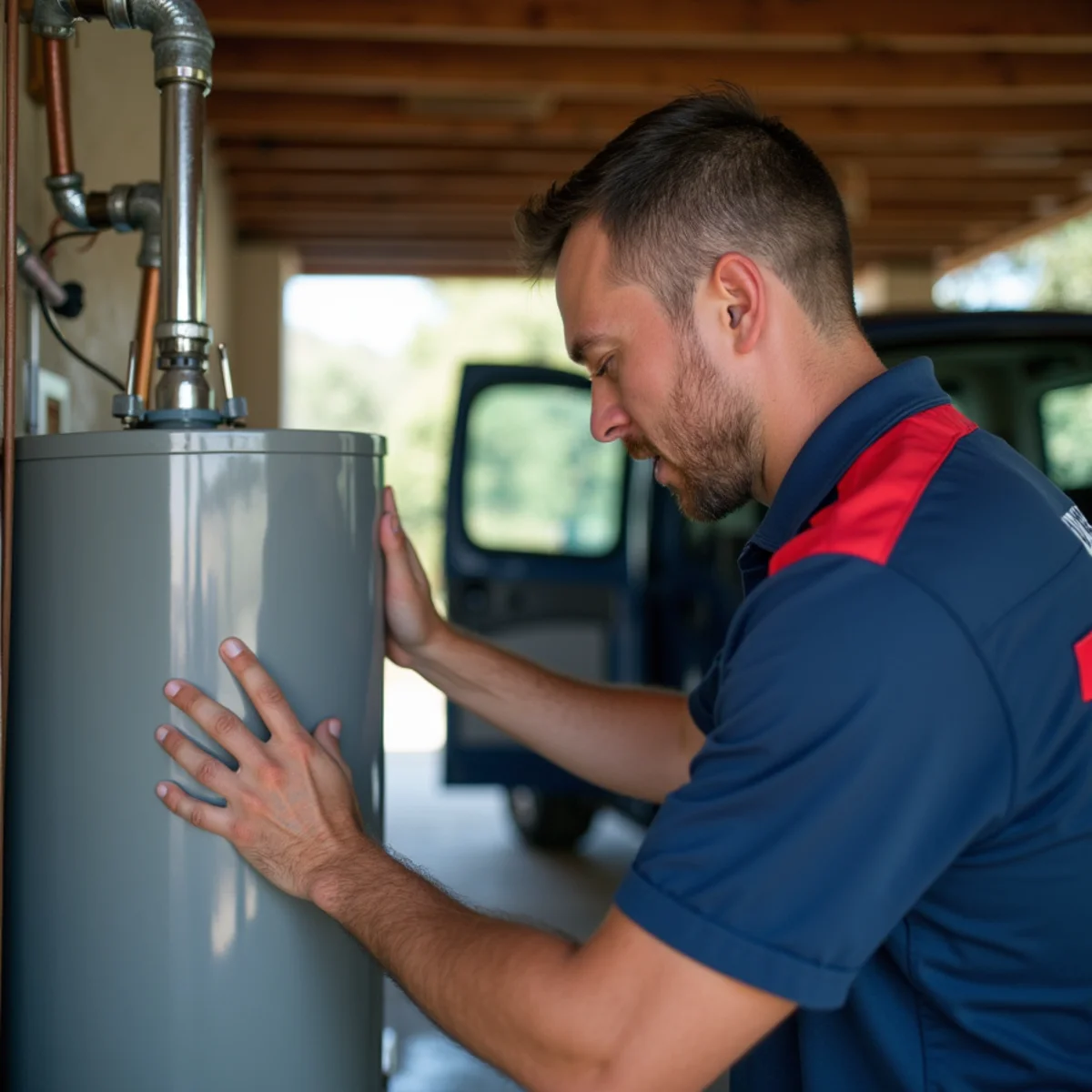
Few things disrupt a morning like a cold shower you didn't plan on. Before you call, a few safe checks often reveal the cause — and sometimes the fix. Here's how to troubleshoot no hot water in a Cibolo home, by heater type, and when it's time to bring us in.
First, a safety note
Check the simple, safe things — breakers, the thermostat setting, the pilot status — but don't attempt gas or electrical repairs yourself. If you smell gas, leave and call from outside. If a breaker trips again after you reset it once, stop and call. Water and gas appliances carry real risk, and some of these checks are look-only.
If you have a gas water heater
- Check the pilot/burner: many newer units have a status light near the gas valve — a specific blink pattern often indicates the fault
- Confirm gas is on: is the gas to other appliances (range, furnace) working?
- Check the thermostat dial hasn't been bumped to 'vacation' or very low
- If the pilot won't stay lit, the thermocouple or gas valve may be failing — that's a service call
If you have an electric water heater
- Check the breaker: an electric heater has a dedicated double-pole breaker — reset it once if tripped
- Press the reset button on the upper thermostat (the red button behind the access panel) — once
- If the breaker trips again or the reset won't hold, a heating element or thermostat has likely failed
Electric heaters have two elements; a failed upper element usually means no hot water, while a failed lower element often means hot water that runs out fast. Both are common after years in Cibolo's hard water.
If you have a tankless water heater
Tankless units show an error code on the display — note it before you do anything, as it points straight to the cause. A common culprit in our area is scale buildup, which chokes the heat exchanger and triggers a fault. If your tankless unit hasn't been descaled on schedule in Cibolo's hard water, that's a likely cause, and it needs professional flushing.
When it's time to call
- A gas pilot that won't stay lit, or any gas smell
- A breaker that trips repeatedly, or a reset that won't hold
- Water pooling around the base of the tank (a leaking tank can't be repaired — it needs replacement)
- A tankless error code that returns after a reset
- Rusty or discolored hot water, or rumbling/popping from the tank
We'll get your hot water back
If the checks above don't restore heat — or you'd rather not poke at a gas or electric appliance — we diagnose and fix it fast. We'll tell you honestly whether it's a repair or a replacement, with the installed cost either way. Serving Cibolo, Schertz, and the Metrocom; call (831) 290-4327.
The Diagnosis Order We Use on a No-Hot-Water Call
When we arrive on a no-hot-water call, we work from cheapest-cause to most-expensive, because that's what saves you money. On an electric unit we check the breaker and both thermostats and elements before ever discussing a new heater — a failed element is a fraction of a replacement. On a gas unit we check the pilot, thermocouple, and gas valve. Only when the tank itself is leaking or the unit is well past its life do we recommend replacement, and we show you why.
In Cibolo specifically, we always check the sediment situation, because hard water is so often the real story behind an element or burner that failed 'early.' Telling you the element died without mentioning the scale that killed it would just set you up for the same failure in a couple of years — which is why we talk about softening and flushing as part of the fix, not as an upsell.
One safety point worth repeating: the reset button on an electric heater (and a tripped breaker) is meant to be pressed or reset once. If it trips again, that's the safety system doing its job — something is drawing too much current or overheating, and forcing it back on repeatedly can turn a simple element swap into a real hazard. The same goes for relighting a gas pilot: one attempt following the printed instructions is fine, but a pilot that won't hold is telling you a part has failed. When the simple reset doesn't stick, stop and let us diagnose it.
Frequently Asked Questions
The most common causes are a tripped breaker or failed element (electric), a pilot that went out or a failing thermocouple (gas), or a scale-related fault code (tankless). A leaking tank or a unit at the end of its life can also be the cause. Work through the safe checks for your heater type, and if they don't restore heat, it's a service call.
Many modern units are designed to be relit by the homeowner following the printed instructions on the tank, and it's usually safe to try once. But if you smell gas at any point, stop, leave, and call from outside. If the pilot won't stay lit after one attempt, the thermocouple or gas valve likely needs service — don't keep trying.
A conventional tank is rated for roughly 8–12 years, but Cibolo's hard water often cuts that short when the tank isn't flushed or the water isn't softened. A well-maintained, softened system can reach or exceed its rated life. If yours failed well before 8 years, scale is the usual reason — and worth addressing before you install the next one.
Cibolo Pro Plumbing
Licensed Texas plumbers (TX Master Plumber (TSBPE)) based in Cibolo, serving the Metrocom for 15+ years. Have a question about your home's plumbing? Call (831) 290-4327.