When a pipe bursts or a fixture lets go, the water doesn't stop on its own — and every minute means more damage. Knowing how to shut off your water before that happens is the single most valuable plumbing skill a homeowner has. Read this now, and show everyone in the house, so no one is learning it while the floor floods.
Step 1: Try the fixture shut-off first
If the leak is at one fixture — a toilet, sink, or water heater — there's usually a small shut-off valve right there. Toilets have one on the wall behind the bowl; sinks have them under the cabinet. Turn it clockwise (righty-tighty) to close. If that stops the water, you've isolated the problem without shutting off the whole house.
Step 2: Find your home's main shut-off valve
If the leak isn't at a single fixture, or the fixture valve won't hold, shut off the main. In Cibolo-area homes, the main shut-off is usually in one of these spots:
- In the garage, often near the water heater or where the line enters
- On an exterior wall, frequently on the side facing the street
- In a utility or mechanical room
- Occasionally in a ground box near the foundation
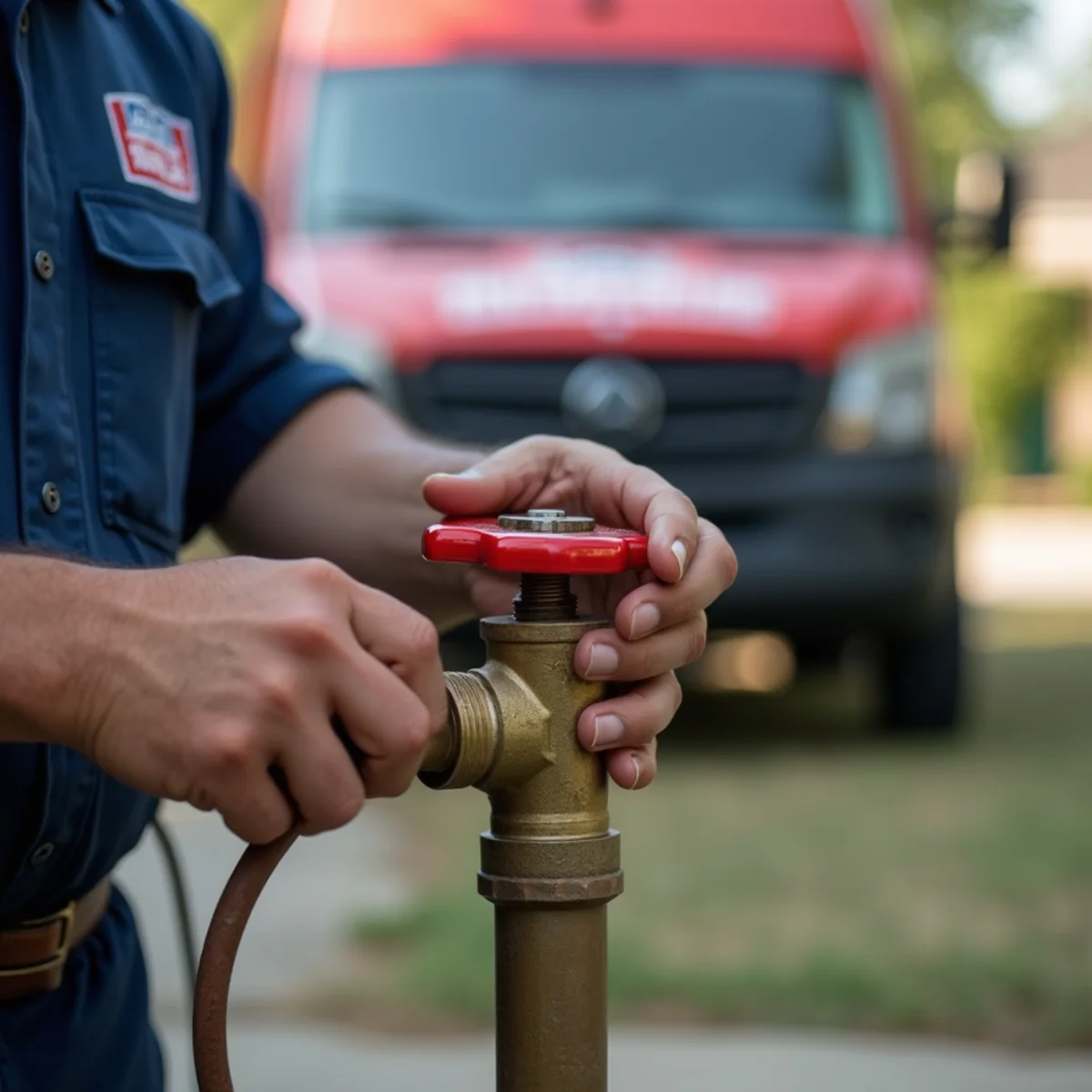
It'll be either a round wheel (gate valve) you turn clockwise several times, or a lever (ball valve) you turn a quarter-turn so it's crosswise to the pipe. Go find it right now — before you need it — and make sure it actually turns.
Step 3: The meter (city) shut-off — last resort
If your house valve is seized or won't stop the flow, you can shut off at the water meter near the street. The meter box has a valve that usually needs a meter key (a cheap tool worth owning) or a wrench. Turn it a quarter-turn to crosswise. This stops all water to the property.
After the water's off
- Open a few faucets (especially the lowest in the house) to drain the remaining water and relieve pressure
- If water reached outlets, the panel, or ceiling fixtures, stay clear of the electrical and cut power to that area if you safely can
- Move valuables and soak up standing water to limit damage
- Call a plumber — for an active burst pipe or flooding, that's an emergency
When to call us
Once the water's off, the emergency is contained, but the repair still needs doing — and on older Cibolo pipe, one failure often means more. We answer 24/7 for burst pipes and flooding across Cibolo and the Metrocom. Our guide on what to do when a pipe bursts covers the next steps. For immediate help, call our emergency plumbers at (831) 290-4327.
The Two-Minute Drill Worth Doing This Weekend
The time to learn your shut-off valve is not while water is pouring through a ceiling. Spend two minutes this weekend: locate your main valve, confirm it turns, and make sure everyone in the house — including teenagers and anyone who stays over — knows where it is and which way it turns. We've been called to homes where the family lost thousands in damage not because the burst was catastrophic, but because no one could find or turn the valve for twenty minutes.
While you're there, look at the valve itself. An old gate valve (the round wheel type) that's never been exercised can seize, or can fail to fully close when you finally need it — sometimes snapping the stem. If yours is stiff, corroded, or weeps when you close it, replacing it with a quarter-turn ball valve is a small scheduled job that turns your emergency shut-off from a question mark into a sure thing.
A couple of small touches make a big difference in an actual emergency. Tie a bright ribbon or tag to the main valve so anyone can spot it instantly, and keep a meter key hanging nearby as a backup. And if you travel in winter, shutting off the main and draining the lines before a hard-freeze trip is the single best protection against coming home to a burst pipe — our Cibolo freeze-protection advice covers the rest. The goal is that shutting off the water is something anyone in your household can do in under a minute, under stress, without hunting for the valve.
Frequently Asked Questions
For a round wheel (gate) valve, turn it clockwise — 'righty-tighty' — several full turns until it stops. For a lever (ball) valve, turn it a quarter-turn so the handle sits crosswise to the pipe. Locate and test yours before an emergency, because a valve that's never been used can seize up.
If the main is off and you expect the water to stay off for a while, turn an electric water heater's breaker off (or a gas unit to 'pilot') so it doesn't run dry and damage the element or burner. Once water is restored and the tank is full again, you can turn it back on. For a short shut-off, it's usually not necessary.
A meter key is an inexpensive tool (available at any hardware store) that fits the shut-off valve inside your water meter box at the street. It's worth owning as a backup in case your home's main valve fails or seizes. The meter valve shuts off all water to the property, which is your last resort when the house valve won't hold.
Cibolo Pro Plumbing
Licensed Texas plumbers (TX Master Plumber (TSBPE)) based in Cibolo, serving the Metrocom for 15+ years. Have a question about your home's plumbing? Call (831) 290-4327.