
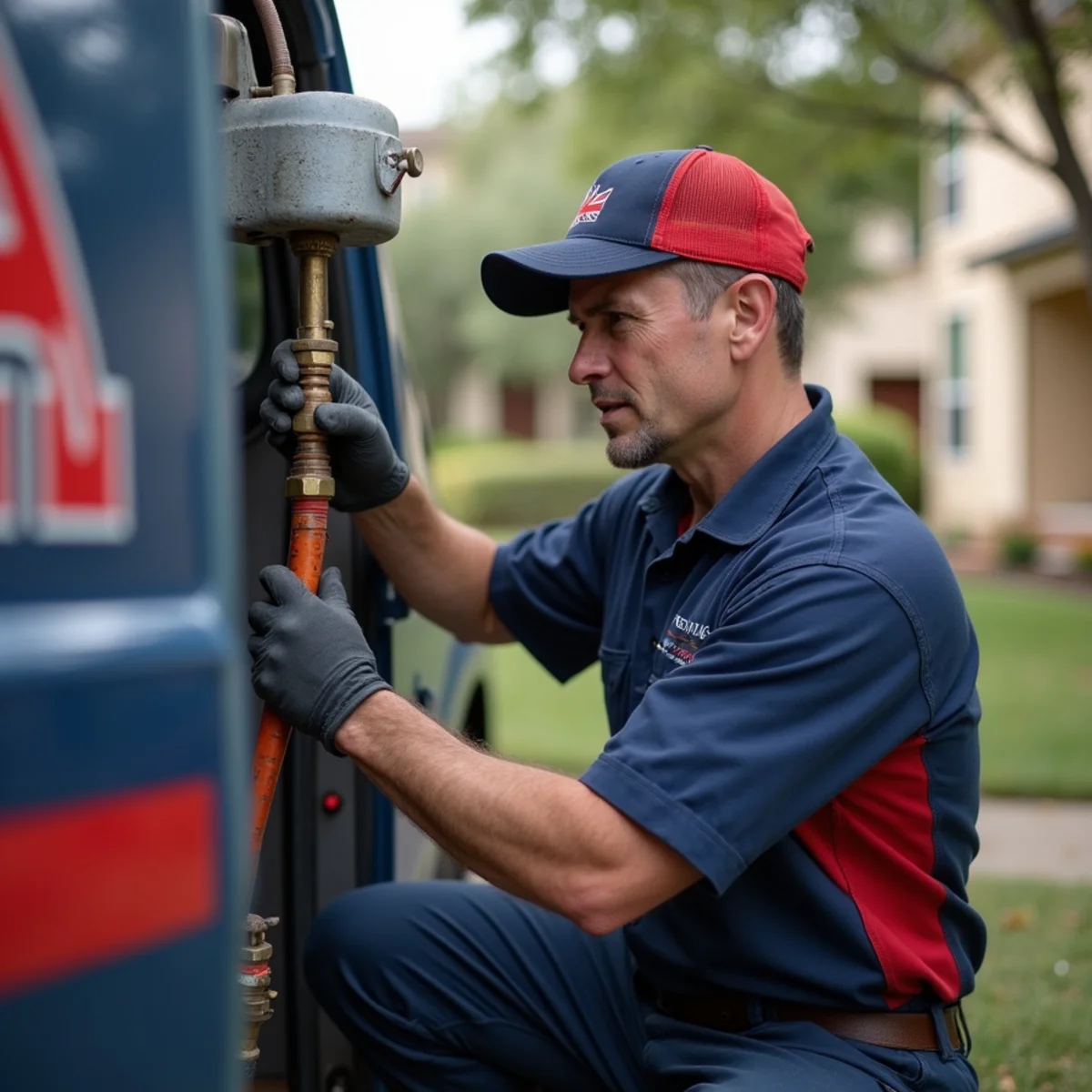
Flushing your water heater is one of the highest-value maintenance tasks you can do — and in hard-water Texas, it matters more than the generic advice suggests. Here's how often to do it and why it protects your investment.
The short answer: at least once a year
The standard recommendation is to flush a tank water heater once a year. But in hard-water areas like Cibolo and the broader region — where hardness runs roughly 150–238 ppm — many homes benefit from flushing every six months, because scale builds up faster.
Why scale builds so fast here
Hard water is loaded with dissolved calcium and magnesium. When it's heated, those minerals precipitate out and settle as sediment on the bottom of the tank. The harder your water, the faster the layer grows — and Texas aquifer water is hard.
What happens if you don't flush
- Sediment insulates the burner or element from the water, so the heater works harder and costs more to run
- The extra heat stress shortens the tank's life — often by years
- You'll hear rumbling and popping as water bubbles through the sediment
- Hot water capacity drops as sediment takes up space in the tank
How flushing works
Flushing drains the tank and rinses out the settled sediment. It's straightforward, but doing it correctly — safely handling a tank full of hot water, fully clearing the sediment, and checking the anode rod and T&P valve while you're there — is why many homeowners fold it into an annual water heater service visit.
The permanent fix: soften the water
Flushing manages the symptom; a water softener treats the cause. By removing the minerals before water reaches the heater, a softener dramatically slows scale buildup — protecting not just the heater but your pipes and every appliance. Many homeowners across Guadalupe County pair the two for the best results.
Stay on schedule
Set a reminder, or let us handle it as part of a maintenance plan. Either way, regular flushing in hard-water Texas is money well spent. Call (831) 290-4327 to schedule a flush and inspection.
How to Flush Safely — and When to Call Instead
A flush is straightforward but not risk-free. You're draining a tank of scalding water: shut off the heat (gas to 'pilot,' or the electric breaker off), let the water cool, close the cold inlet, connect a hose to the drain valve, and run it to a safe location until it flows clear. Refill fully before restoring heat so an electric element never fires dry.
Two situations call for a pro instead. On an older unit, opening a drain valve that's never been used can start a leak that won't reseal — so if the tank is aging, have it done as part of a service visit. And if the water won't drain or comes out as thick sludge, the sediment is heavy enough that it needs to be broken up properly rather than forced.
Frequently Asked Questions
It can, in the sense that disturbing a plastic drain valve or heavy sediment on a neglected older tank sometimes starts a leak that won't stop. That's not a reason to never flush — it's a reason to flush regularly from the start, and to let a pro handle the first flush on an older, never-flushed unit.
Heavy, compacted scale can clog the drain valve or refuse to flow. A plumber can break it up, use a larger clearing method, and assess whether the buildup has damaged the tank. If it's that far gone, replacement plus a softener is usually the better spend.
Yes — even more importantly in hard water. A tankless unit has no tank of sediment, but scale builds on the heat exchanger and kills efficiency. It needs periodic descaling (a vinegar or descaler flush), which we set up on a schedule at installation.
Cibolo Pro Plumbing
Licensed Texas plumbers (TX Master Plumber (TSBPE)) based in Cibolo, serving the Metrocom for 15+ years. Have a question about your home's plumbing? Call (831) 290-4327.