Water heaters in Cibolo often fail years before the sticker on the side promises. The reason is in the water itself: the hard, mineral-heavy supply drawn from the Edwards and Carrizo-Wilcox aquifers. Here's exactly how it shortens your heater's life — and what you can do about it.
What 'hard water' means here
Local water hardness is estimated at roughly 150–238 ppm, which is moderately to very hard. That number is a measure of dissolved calcium and magnesium. When water is heated, those minerals come out of solution and settle as scale — a chalky, rock-like deposit.
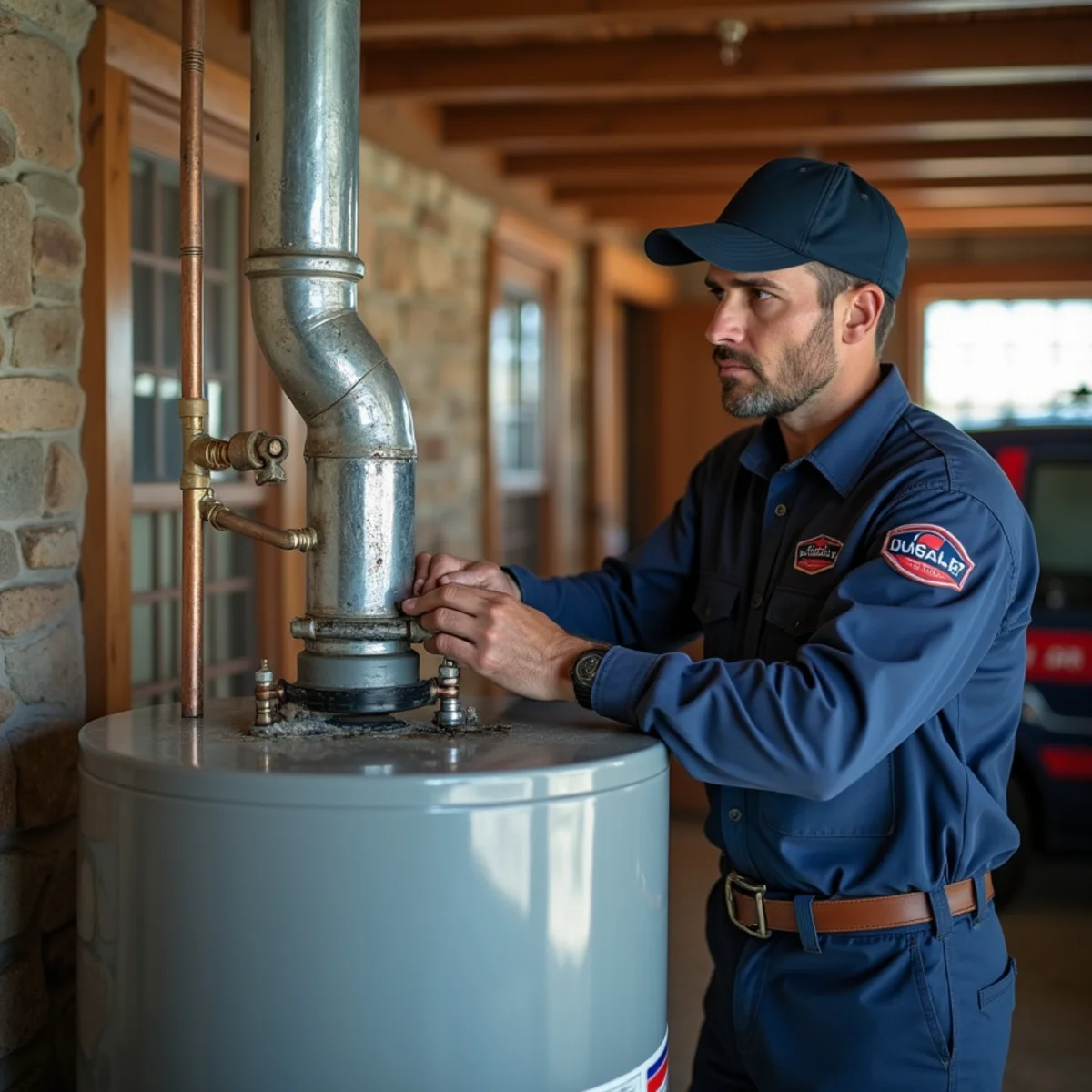
How scale kills a water heater
- In a tank, scale collects on the bottom, insulating the burner or element from the water so the heater works harder and longer for the same hot water
- That extra work overheats the steel and shortens the tank's life
- Scale on electric elements causes them to burn out early
- The rumbling or popping you hear is water bubbling up through the scale layer
How to protect your heater
1. Flush the tank annually
Draining and flushing the tank once a year removes settled scale before it builds up. In hard-water Cibolo, this simple maintenance is one of the highest-value things you can do — it's a core part of any water heater service visit.
2. Install a water softener
The real fix is treating the water before it reaches the heater. A whole-home water softener removes the calcium and magnesium that cause scale, protecting not just your heater but your pipes, fixtures, and every water-using appliance. It's the single best way to make your next heater last.
3. Consider tankless
A tankless water heater isn't sitting full of scaling water all day, though it still needs periodic descaling. Paired with a softener, it's a durable long-term setup for hard-water homes.
A common story across the Metrocom
Homeowners in Cibolo and throughout Guadalupe County tell us the same thing: a heater that died in 6 or 7 years instead of 12, packed with scale. Softening the water changes that math. Ask us about protecting your next heater — call (831) 290-4327.
How to Tell Scale Is Already Hurting Your Heater
You can hear and see the early signs before the tank fails. Rumbling or popping means water is bubbling up through a layer of settled scale. A recovery time that's gotten noticeably slower means the burner or elements are insulated by that layer and working harder. And if the water you drain during a flush comes out chalky or full of grit, the sediment is well established.
Once scale is that far along, flushing helps but can't fully reverse it — the efficiency and lifespan you've lost are gone. That's why we push prevention here: a yearly flush from the start, and a whole-home softener that stops the minerals before they ever reach the tank. In Cibolo's water, those two habits are the difference between a heater that dies at six years and one that reaches twelve.
Frequently Asked Questions
No — properly softened water is easier on a tank, not harder, and manufacturers don't void warranties for using a correctly installed softener. In fact, uncontrolled hard-water scale is a common reason heaters fail before their warranty period is up.
A thorough flush removes loose sediment and can restore some efficiency, but it can't undo damage already done to the tank lining or elements. If the unit is older and heavily scaled, you're often better off replacing it and protecting the new one with a softener from day one.
For most homes, yes. Beyond protecting the water heater, it extends the life of every water-using appliance, keeps fixtures and glassware clear, and improves how soap and skin feel. Given local hardness around 150–238 ppm, it typically pays for itself over time.
Cibolo Pro Plumbing
Licensed Texas plumbers (TX Master Plumber (TSBPE)) based in Cibolo, serving the Metrocom for 15+ years. Have a question about your home's plumbing? Call (831) 290-4327.